Learn more about carpet cleaning
Outline:
– Understanding Carpets: Fibers, Soil, and Indoor Air
– Cleaning Methods Explained: Vacuuming, Hot Water Extraction, Dry Approaches, and More
– Stain Identification and Spot-Treatment Playbook
– Preventive Care and Routine Maintenance That Pays Off
– DIY vs Professional Cleaning: Costs, Decisions, and Expectations
Introduction
Carpets are more than décor; they function as soft filters that trap dust, grit, allergens, and everyday spills. Managed well, they cushion noise, stabilize room temperature, and make a space feel grounded and inviting. Managed poorly, they fade, mat, and harbor odors. Learning how carpet fibers interact with soil, moisture, and cleaning chemistry helps you choose techniques that preserve texture and color while protecting indoor air. This article offers practical, data-informed guidance you can apply immediately—whether you’re spot-treating a new stain, planning a seasonal deep clean, or deciding if a professional visit is due.
Understanding Carpets: Fibers, Soil, and Indoor Air
To care for a carpet, start by understanding what it’s made of and what ends up inside it. Common residential fibers include nylon, polyester, polypropylene, triexta, and wool. Each has a unique surface energy and dye system, which affects how it holds color and how it releases soil. Nylon is resilient under foot traffic but may fade under strong sunlight without UV protection. Polyester resists water-based stains yet can attract oily soils, making routine vacuuming vital. Wool offers natural softness and temperature regulation, but it prefers a gentle, slightly acidic cleaning solution and careful drying to prevent distortion.
Soil in carpet is mostly dry particulate matter—think grit, dust, and skin flakes—that settles between fibers. Industry testing consistently shows that dry soil makes up the majority of the contamination load in typical homes. Because this soil is abrasive, every step can act like sandpaper on fiber tips, dulling the appearance and crushing pile over time. The remaining fraction tends to be sticky residues from cooking aerosols, body oils, and tracked-in pollutants, which bind fine dust and make vacuuming less efficient.
Indoor air quality and carpet health are linked. Carpets can temporarily trap airborne particles and allergens until they’re removed by vacuuming, which helps reduce what’s resuspended into the air when people move around. However, that benefit depends on consistent maintenance. When neglected, the carpet’s “filter” function simply becomes a reservoir. A sensible schedule is to vacuum high-traffic zones several times a week and other areas weekly, then perform a deeper clean periodically based on occupancy, pets, and sensitivities.
Practical takeaways include:
– Match chemistry to fiber: slightly acidic rinses complement wool, while many synthetics tolerate a broader pH range.
– Control moisture: moderate water and thorough extraction protect backing materials and prevent musty odors.
– Prioritize dry soil removal: it reduces abrasion and makes any wet method more effective.
Cleaning Methods Explained: Vacuuming, Hot Water Extraction, Dry Approaches, and More
Vacuuming is the foundation of carpet care. Since dry soil dominates the contamination profile, an effective vacuum routine often does more to protect appearance than infrequent deep washes. Aim for slow, overlapping passes and adjust the height so the beater bar or brush agitates fibers without excessive pull. Empty canisters or change bags before they’re overfull to maintain airflow. For dense or high-pile carpets, deliberate, patient passes can capture more embedded grit than quick sweeps.
When deeper cleaning is due, you’ll encounter several approaches, each with trade-offs. Hot water extraction—often called “steam” cleaning, though it mainly uses hot water—injects solution and immediately extracts it. Properly performed, it can flush out sticky residues and fine particulates, leaving fibers refreshed. Drying typically ranges from several hours to half a day depending on humidity, airflow, and pile density. Pros include thorough soil removal and compatibility with many fiber types; potential drawbacks are longer dry times and the need for methodical extraction to avoid overwetting.
Dry compound cleaning spreads a slightly moist absorbent material that’s brushed through the pile, then vacuumed once it binds soil. It’s valued for short downtime and can be helpful in humidity-prone climates or for maintenance between periodic flushes. Encapsulation, another low-moisture method, uses polymers that bind and crystallize soil as they dry, making the next vacuum more productive. Bonnet cleaning focuses on the surface and can improve appearance quickly, but it may leave residues below the tips if used alone.
Choosing among methods depends on goals, fiber, and constraints:
– Need fast turnaround? Low-moisture options minimize downtime.
– Fighting residues or pet accidents? Water-based extraction targets depth.
– Managing delicate wool? Use gentle chemistry and controlled moisture, regardless of the method.
In practice, a layered strategy works well: frequent vacuuming for abrasion control, periodic low-moisture maintenance to keep soils from binding, and scheduled extraction to reset the carpet. Rotate methods with the seasons, and always test solutions in an inconspicuous spot before broader use.
Stain Identification and Spot-Treatment Playbook
Not all stains are created equal. Success depends on identifying the chemistry and responding with the right mechanics, solution, and patience. Broadly, stains fall into categories: tannins (coffee, tea, wine), proteins (milk, blood, egg), oils and greases (cooking, cosmetics), dyes (fruit punch, ink), and particulates (mud, soot). Each group behaves differently with water, heat, and pH, so a one-size-fits-all approach often spreads or sets the mark.
General rules protect you from common mistakes: act quickly, blot—don’t rub—so you lift rather than grind, and work from the outside inward to avoid halos. Use white, dye-free cloths to prevent color transfer. For fresh spills, remove solids with a dull spoon, then blot liquids with layered towels under and over the spot to prevent migration through the backing. Avoid overheating protein stains; warm water can coagulate them. On the other hand, gentle warmth can help oily residues release, provided you blot thoroughly and rinse lightly after.
Category-specific tactics:
– Tannins: Blot with cool water first. Follow with a mild, slightly acidic solution. Rinse and blot again. If a faint ring appears, repeat with lighter pressure rather than scrubbing.
– Proteins: Start with cool water and an enzyme-based cleaner formulated for fabrics. Allow dwell time per directions, then blot and rinse. Repeat gently rather than increasing force.
– Oils/Grease: Place a solvent-safe cloth beneath the spot, apply a small amount of a fabric-safe solvent to the top cloth, and blot. Follow with a mild detergent solution to remove residue, then rinse.
– Mud/Particulates: Let dry fully, break up crust, vacuum thoroughly, then address remaining discoloration with a light detergent rinse.
To build a reliable spot kit, keep:
– White microfiber cloths and paper towels
– A neutral pH detergent, a mild acidic rinse, and an enzyme cleaner
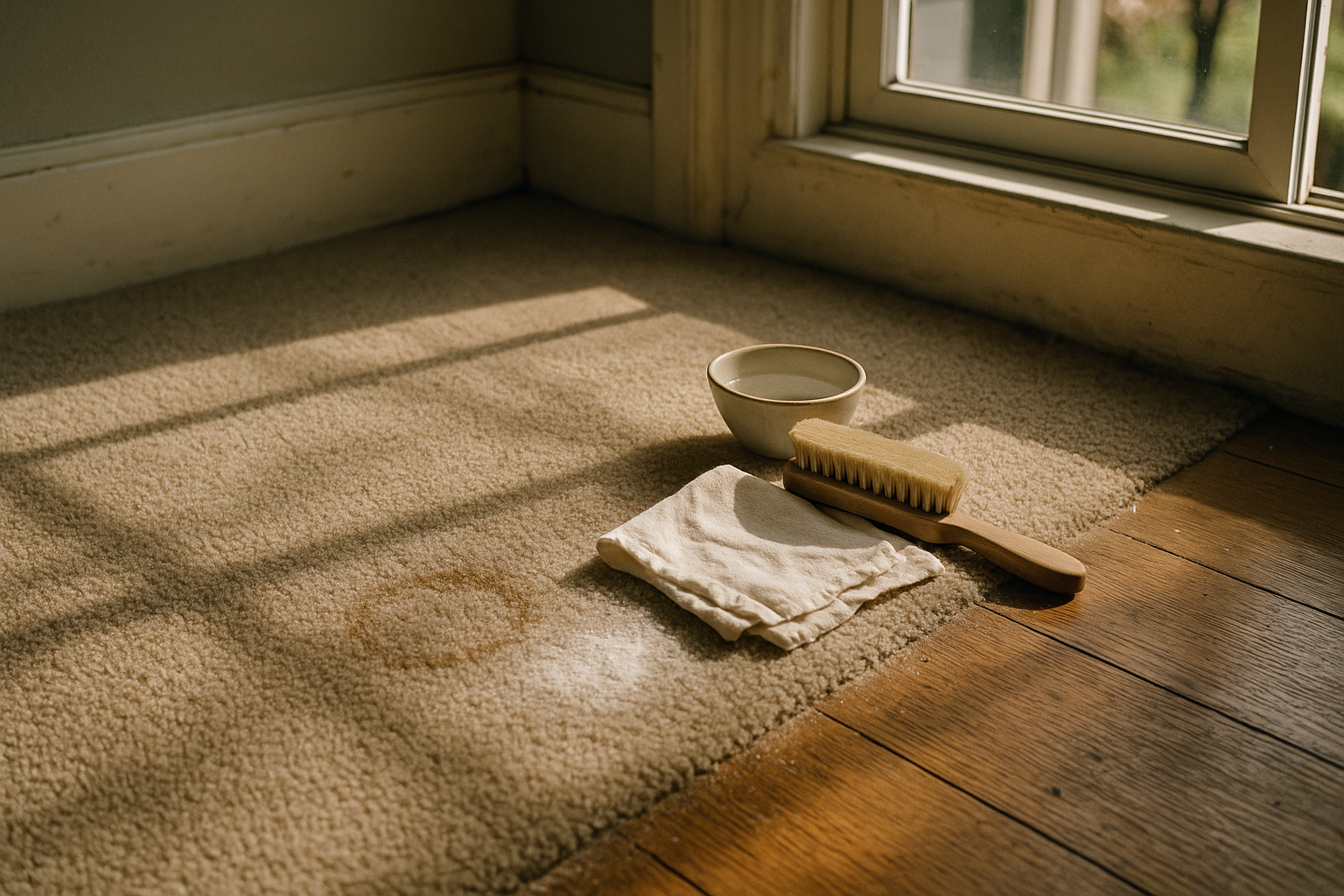
– A soft-bristled brush and a small spray bottle for controlled application
Document what worked. Note the spill type, solution, dwell time, and result. That simple log turns guesswork into repeatable wins, reduces the urge to oversaturate, and helps you decide when a stubborn dye transfer or set stain warrants professional attention.
Preventive Care and Routine Maintenance That Pays Off
Preventive care reduces workload, cost, and risk. Most soil arrives through entryways on shoes and paws, then disperses as fine dust. Placing a sturdy, cleanable mat outside and a second mat inside captures much of that burden. In facilities research, layered matting has been shown to cut tracked-in grit significantly; at home, that translates into fewer vacuum passes and slower wear on fiber tips. A simple shoe-drop habit by the door compounds the benefit.
Vacuuming cadence matters more than marathon sessions. High-traffic lanes—hallways, living rooms, kid zones—thrive on several short sessions per week. Lower-traffic bedrooms and guest areas can do well with weekly passes. Use deliberate strokes, overlap slightly, and alternate patterns occasionally to lift pile and reduce directional matting. Sprinkle in edge cleaning with a crevice tool; dust accumulates where baseboards meet carpet and can migrate as people walk.
Mind moisture and airflow. After any wet cleaning, accelerate drying with open windows when weather allows, ceiling fans, or portable fans pointed across—not directly down into—the carpet. Rapid evaporation limits musty odors and helps protect backing layers. In humid seasons, a dehumidifier can shorten dry times and curb the conditions that let odors linger.
Small, recurring habits make a visible difference:
– Groom or rake shag and high-pile areas to prevent matting.
– Rotate furniture or shift rugs a few inches seasonally to even out wear.
– Use coasters and pads under legs to prevent dents, then lift fibers with a warm (not hot) damp cloth and gentle brushing if imprints form.
– Schedule a calendar reminder for a seasonal inspection: look for traffic gray lanes, frayed seams, or wicking spots that reappear after drying.
Finally, tailor routines to your home’s story. Pets, kids, climate, and allergy sensitivities shape the ideal frequency for vacuuming and deep cleaning. A proactive plan keeps the carpet feeling plush underfoot and looking inviting, while avoiding the scramble that follows a preventable stain or odor flare-up.
DIY vs Professional Cleaning: Costs, Decisions, and Expectations
Both DIY and professional paths can deliver clean, healthy carpets when chosen for the right reasons. DIY shines for frequent maintenance, quick spill response, and budget control. Portable extractors and low-moisture tools make it feasible to reset small areas without scheduling help. The keys are thoughtful chemistry, measured moisture, and patient extraction. Renting equipment can be cost-effective, though results vary with machine condition and user technique. Expect to invest time in setup, slow cleaning passes, and thorough drying.
Professional cleaning adds expertise, commercial-grade extraction, and method selection tuned to your fiber and soiling profile. Reputable providers perform a pre-inspection, discuss spots and traffic patterns, and test solutions on inconspicuous areas. Typical service models price by room or square foot, with ranges that reflect region, method, and optional treatments. Dry times after a carefully managed hot water extraction commonly fall within several hours, influenced by pile density and ambient humidity.
Questions to weigh before you decide:
– Scope: Is the task a few rooms or the whole home? Larger projects may favor a professional visit for efficiency and consistency.
– Complexity: Are there chronic pet accidents, recurring wick-back stains, or delicate fibers like wool? Experience helps prevent unintended damage.
– Time and tools: Do you have the patience for slow, overlapping extraction passes and the airflow to dry promptly?
Set expectations to avoid surprises. Ask about pre-vacuuming, spot treatment, furniture handling, and what is or is not included in a quoted price. Clarify drying guidance and ventilation tips. If you prefer low-odor or plant-based solutions, request them in advance; many providers offer such options. Before any visit, declutter floors, secure small items, and point out concerns so attention goes where it matters most.
A thoughtful blend often works well: maintain with frequent vacuuming and targeted DIY spot care, then schedule a professional reset on a cadence that matches your household—anywhere from six to eighteen months, adjusted for traffic and sensitivities. That rhythm keeps appearances high and surprises low.
Conclusion
Carpet care rewards steady habits: remove dry soil before it abrades fibers, match cleaning methods to your goals, and respond quickly to spills with targeted steps. Whether you prefer to handle routine tasks yourself or bring in a well-regarded service periodically, the payoff is quieter rooms, cleaner air, and colors that stay true longer. Build a schedule that suits your traffic, pets, and climate, and your carpet will return the favor with comfort you can see and feel.